 Español
 English

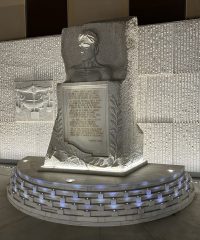
♣♣ Of Tourist Interest. Walking up Calle García Lorca and after leaving the Plaza Almería, with its impressive “Marmoris” ensemble, we come across the Monumento al Cantero (Monument to the Stonemason). A commemorative sculpture sculpted…
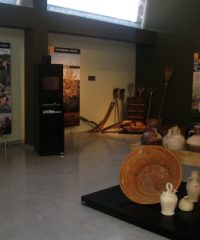
Interpretation Center of the Habitat “Museo del Campo”. The Museum of the Field of Taberno or ethnological museum was created in 1998 with the objective of recovering and preserving all those objects that during the last two centuries…
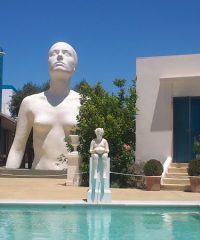
The Ibáñez Museum is one of the largest collections of Contemporary Art of Andalusia. By the magnitude, variety and quality of its funds, more than 1,200 works of art, in which are represented contemporary artists of the first level as Joaquín…
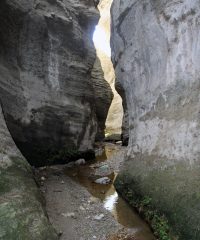
One of the places that most impress those who take a walk through the Almanzora Valley in the north of Almería, is “El Estrecho” located in the municipality of Urrácal. This narrow gorge is located on the Salada ravine at the foot of the…
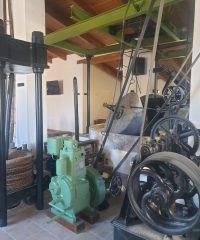
We invite you to visit the Olive Oil Interpretation Centre in Suflí (Almería). This interpretation centre is located in an old restored olive mill, where you can contemplate the process of grinding and squeezing the olives to obtain the oil. In…
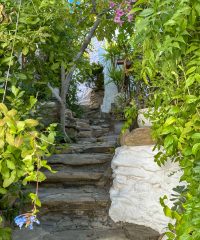
Chercos, whose name derives from the Mozarabic word Yerku, which means “La Encina”, applied to the place, by the holm oak forest that existed in its surroundings. Its origins go back to the Middle Ages, when we know that this town was…
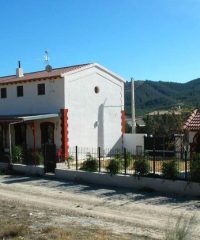
The stations, such as the old railway station of Purchena, have progressively acquired a historical, sociological and aesthetic importance that surpasses its simple technical function. They are, like the railway itself, one of the characteristic…
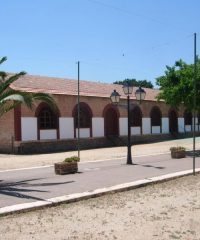
The Old Railway Station of Zurgena is located in the neighborhood of La Alfoquía in the town of Zurgena. It was inaugurated on March 28, 1885 and closed on January 1, 1985. There were three types of trains: the fruit carrier, the mail and the…
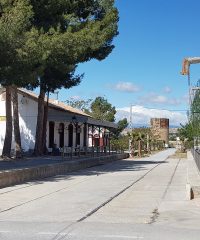
The old railway station located in Tíjola is less than 1km from the town. It is crossed by the recently completed Almanzora greenway. Next to the station there is a train machine that used to travel along the same route.
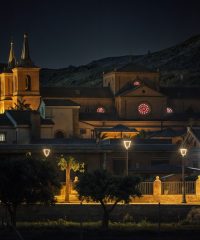
The Our Lady of Carmen Church was built in the nineteenth century, between 1816 and 1870. Architecturally it is closer to being a cathedral. It has neoclassical features: a Latin cross plan, two lateral naves, covered by a dome with a dome on the…